Starting Configuration
Preparing for Configuration
To use AMF Security, you need to set the initial settings of the AMF Security application in the Web GUI of AT-VST-APL. For the installation and setting of AT-VST-APL, please refer to the AT-VST-APL document posted on our website.Supported Web Browsers
You can configure AMF Security through its web-based management interface.Make sure that your management PC has one of the following web browsers installed:
- Google Chrome
Initial setting of AMF Security
In the initial state of AT-VST-APL, the application instance of AMF Security is not set. Please login to AT-VST-APL's management web interface and set the application instance of AMF Security.For more information, please refer to the AT-VST-APL document posted on our website.
Logging In to the Management Web Interface
You can configure AMF Security through its web-based management interface.- Use one of the following methods to log in to the AMF Security setting screen.
- Start a web browser and enter the IP address set for AMF Security.
The IP address is explained using 192.168.1.10.
https://192.168.1.10
Note
Communication between the web browser and AMF Security is over HTTPS.
- On the Dashboard page of AT-VST-APL, click the "Open" button in the AMF-Sec-app section.
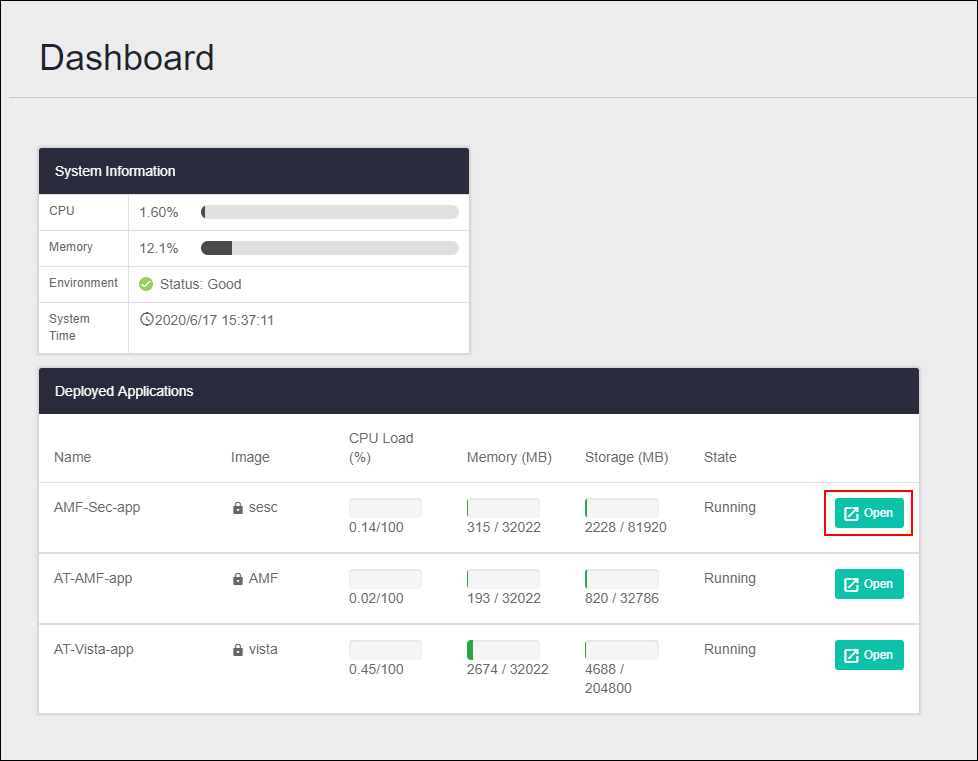
- On the AMF Security management page of AT-VST-APL, click the "Open" button.
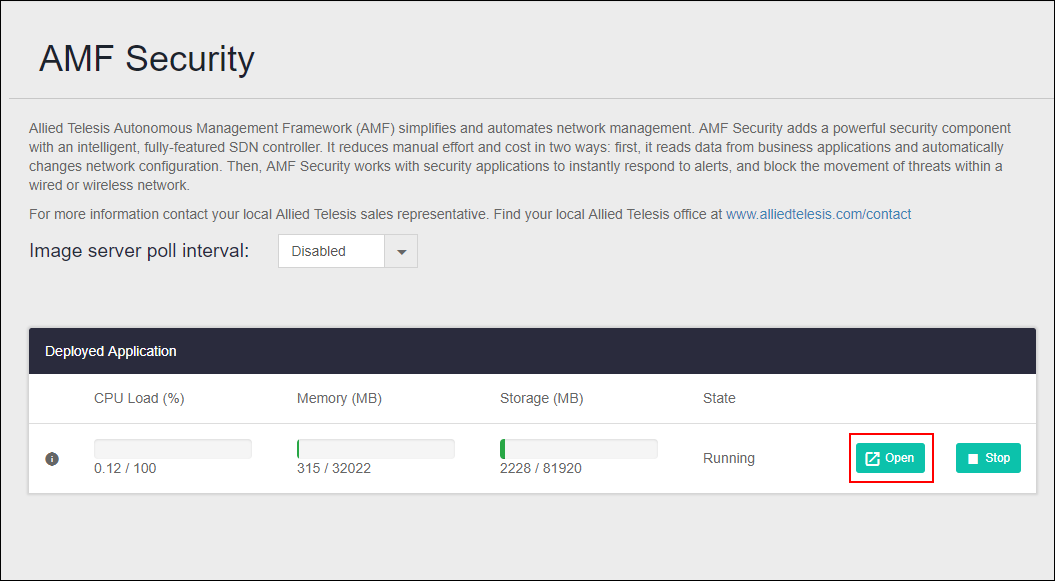
- On the Container Services page of AT-VST-APL, click the "Open" button in the AMF-Sec-app section.
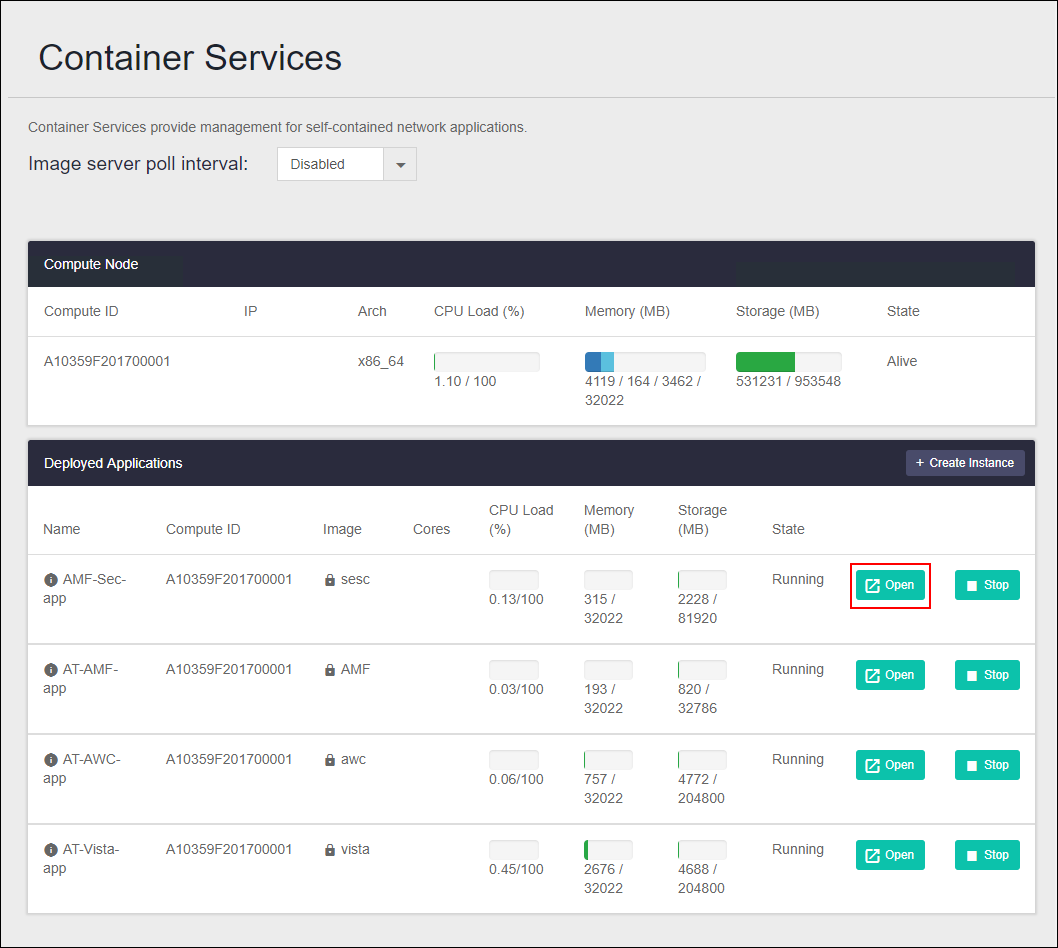
- Start a web browser and enter the IP address set for AMF Security.
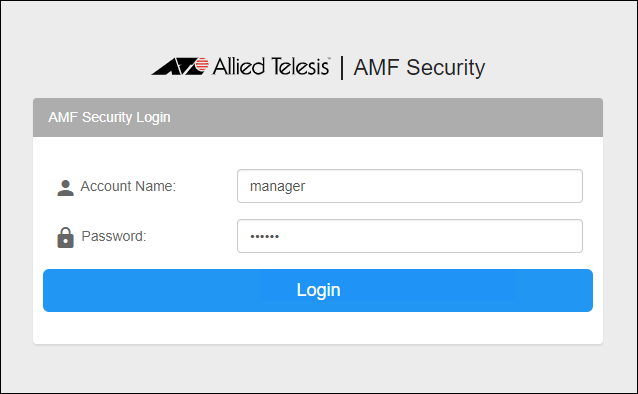
- The following login page is displayed. Enter the default Account Name and Password and click the "Login" button.
Entered password is masked with bullets on the screen.
Note
The default Account Name is "manager" and the Password is "friend".
Note
If a security warning screen appears, follow the onscreen instructions to continue browsing the site.
If you have a SSL server certificate issued by a trusted certification authority (CA), you can install the certificate on the Network Settings > System Information page's or the AMF > AMF Application Proxy Settings page's "SSL Certificate" section after logging in to the AMF Security. - After logging in, the Device > Active Device List page is displayed.
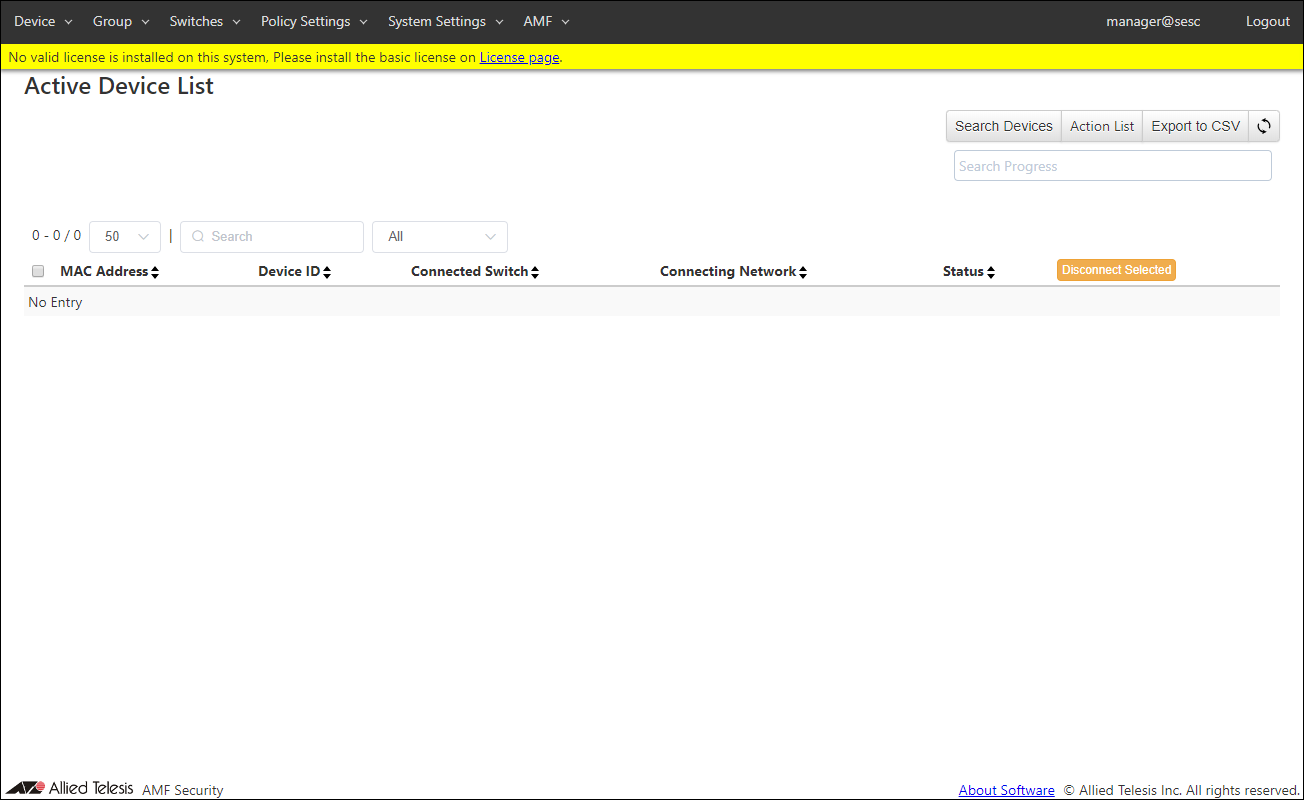
Note
A login session times out after 10 minutes of inactivity. The Login screen reappears when you perform any operation after the previous session has timed out.
Installing Licenses
You have to install proper licenses before you start using AMF Security.There are two types of licenses: "Base" and "Addon".
- You always need the Base license to run AMF Security.
OpenFlow and AMF Application Proxy do not work until the base license is installed.
- The Addon license is for adding an OpenFlow switch. AMF Application Proxy works with a Base license only, no Addon license for nodes is required.
Although you can install Addon licenses before installing the Base license, AMF Security does not work until the Base license is installed.
NotePurchase a license to use OpenFlow.
NoteAfter registering the basic license, if you delete or add the basic license during operation of the OpenFlow and AMF Application Proxy network, OpenFlow and AMF Application Proxy may not operate normally.
Therefore, disconnect AMF security from the operating network before removing or adding a registered base license.
If the base license is removed or added during operation and AMF Application Proxy does not work properly, restart AMF security.
To install the license, follow the steps:
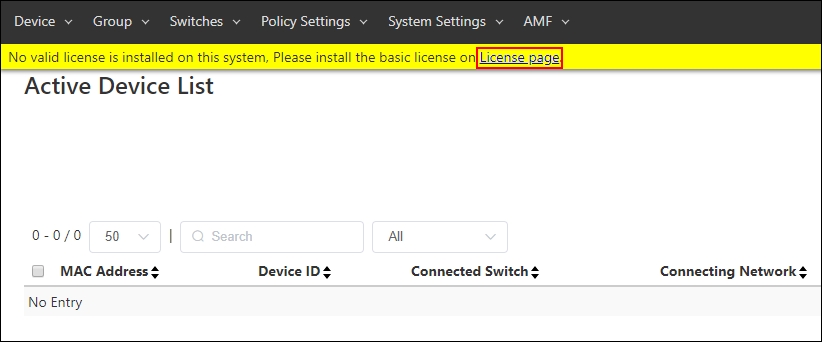
- Click the "License page" in the message displayed at the top of the setting screen.
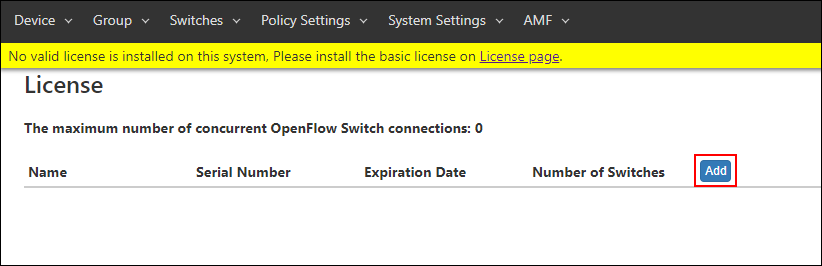
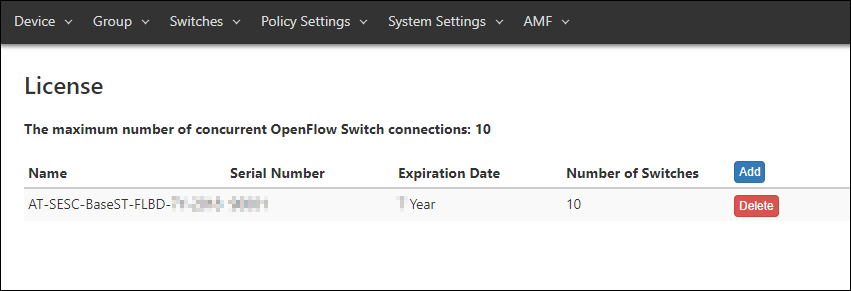
- The System Settings > License page is displayed. Click the "Add" button.
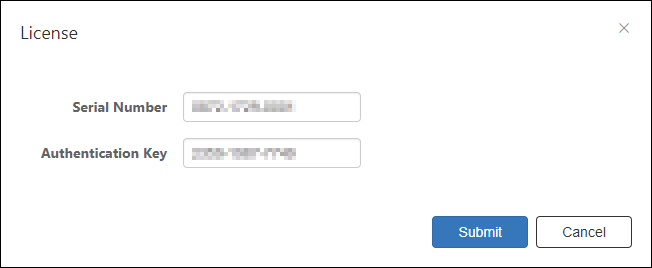
- The License dialog is displayed. Enter the "Serial Number" and "Authentication Key" shown on the license certificate and click the "Submit" button.
- If the "Name" and "Serial Number" of the registered license are displayed on the System Settings > License page, the installation is successful.
Setting the timezone
AMF Security gets and uses the system time of AT-VST-APL, but it does not get the timezone setting. Therefore, for example, to use Japan time (JST: 9 hours ahead of Coordinated Universal Time (UTC)), set according to the following procedure:NoteIf you change the timezone setting, AMF Security restarts and the setting is retained.
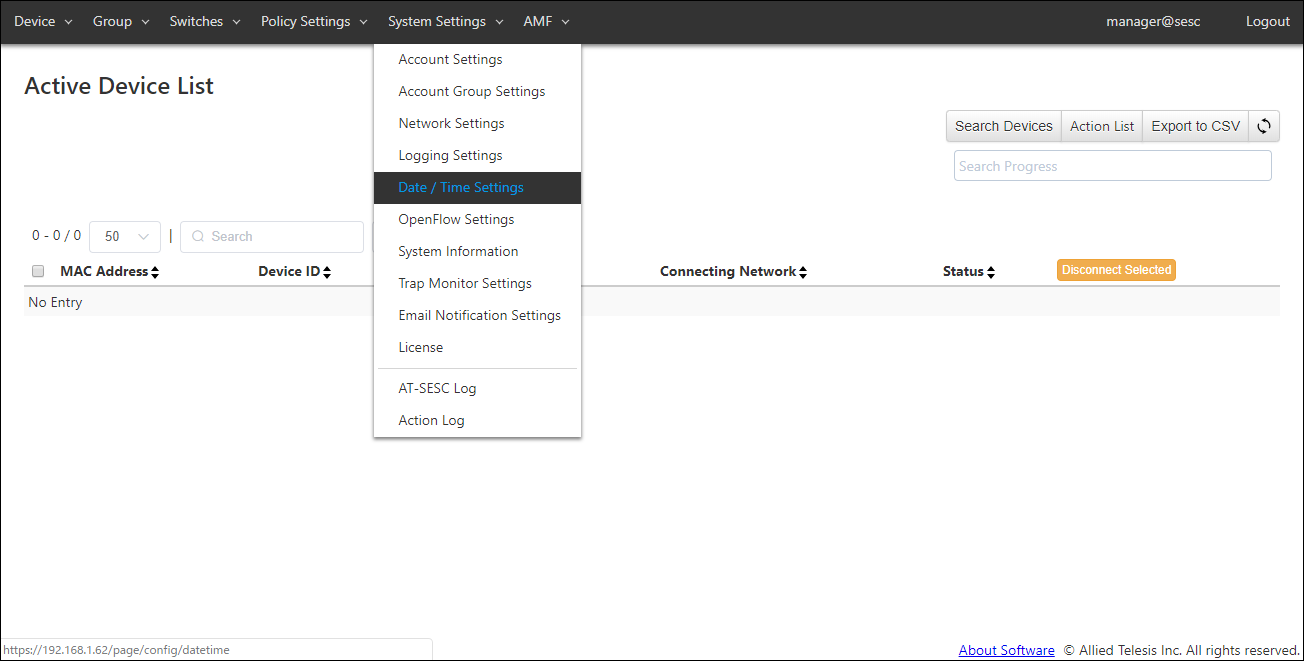
- Click the "System Settings" menu, then click the "Date / Time Settings" submenu.
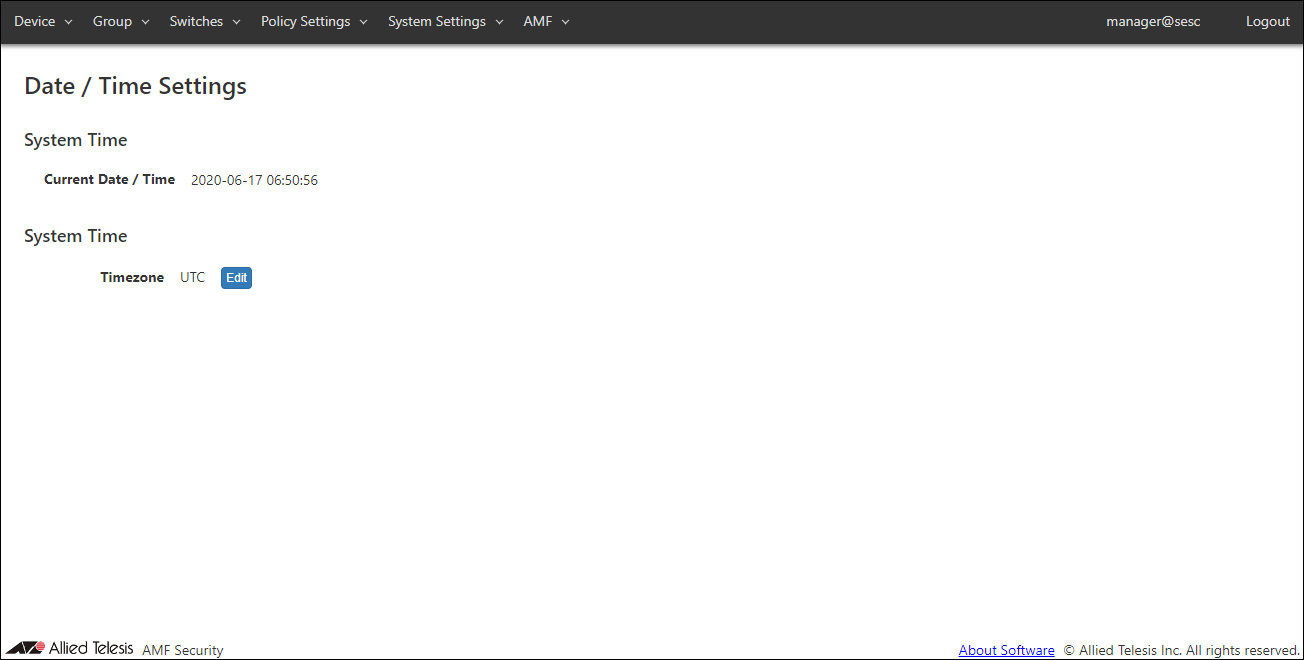
- The System Settings > Date / Time Settings page is displayed. Click the "Edit" button in the Timezone item.
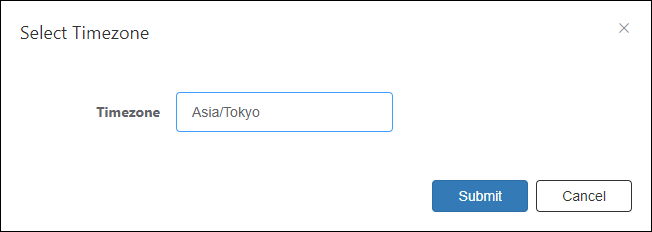
- The Select Timezone dialog is displayed. Select the "Asia/Tokyo" from the drop-down list and click the "Submit" button.
- After the message is displayed, AMF Security restarts and the login page is displayed again.

25 Mar 2021 14:11